High-Efficiency FRP Blowers for Industrial Ventilation
Engineered for extreme durability. Our advanced FRP centrifugal blowers deliver uncompromising performance in fume extraction and corrosive gas handling applications.
Request Quote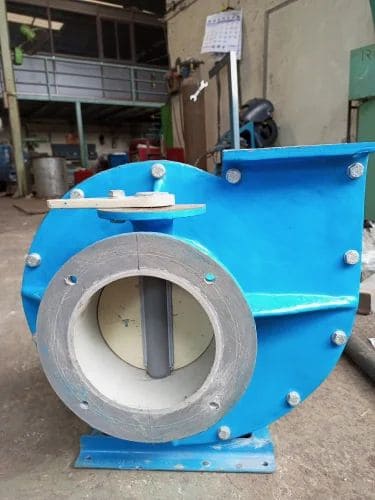
About FRP Blowers
An FRP blower (Fiberglass Reinforced Plastic blower) is a critical component in modern industrial ventilation. Unlike standard metal blowers that degrade rapidly in harsh conditions, FRP blowers are molded using high-grade composite resins designed specifically to resist chemical attack.
They play a vital role in industrial environments by ensuring safe and continuous fume extraction. When dealing with acidic vapors, alkaline mist, or general corrosive gas handling, FRP is the preferred material choice due to its inherent resistance to corrosion, high structural strength, and long operational lifespan.
Types of FRP Blowers
FRP Centrifugal Blower
Designed for high-pressure applications. Ideal for pushing air through long ductwork systems and scrubbing towers in chemical plants.
Axial Flow Blower
Perfect for moving large volumes of air at low pressures. Commonly used for general warehouse and factory industrial ventilation.
Direct Drive Blower
Features an impeller mounted directly on the motor shaft. Offers a compact design with minimal maintenance requirements.
Belt Drive Blower
Utilizes a belt and pulley system. Provides flexibility in adjusting fan speeds to meet specific airflow demands.
Key Features
Corrosion Resistant Construction
Impervious to acidic and alkaline fumes, preventing structural decay.
High Airflow Efficiency
Aerodynamically balanced impellers for maximum industrial ventilation.
Low Maintenance
No painting or specialized coatings required. Easy to clean and service.
Durable & Lightweight
High strength-to-weight ratio ensures easy installation and long life.
Technical Specifications
| Specification Parameter | Standard Range / Details |
|---|---|
| Airflow Capacity (CMH) | 500 CMH to 1,50,000 CMH |
| Static Pressure Range | 25 mmWG to 1000 mmWG |
| Motor Power Range | 0.5 HP to 150 HP (Premium Efficiency) |
| Material | Premium FRP with Vinylester / Bisphenol Resin |
| Impeller Type | Backward Curved / Radial (Dynamically Balanced) |
| Operating Temperature | Up to 120°C (Depending on resin selection) |
Industrial Applications
- Chemical Industries
- Acid Fume Extraction
- Laboratories
- Electroplating Plants
- Pharmaceutical Manufacturing
- Industrial Ventilation Systems
Working Principle
1. Air Intake
Corrosive gases enter the blower casing through the inlet duct.
2. Impeller Rotation
The motor drives the FRP impeller, accelerating the captured air radially.
3. Pressure Gen.
Kinetic energy is converted into static pressure within the volute casing.
4. Air Discharge
Pressurized, filtered air is safely exhausted through the outlet system.
Why Choose AKFRP ENTERPRISES
Custom-Built Systems
We tailor every FRP blower to meet your exact specifications for industrial ventilation and static pressure requirements.
Quality-Tested Materials
Our units are fabricated using premium, chemically resistant resins, undergoing strict quality assurance for ultimate durability.
Efficient Airflow Design
Dynamically balanced impellers ensure smooth operation, low vibration, and highly efficient corrosive gas handling.
Reliable Performance
Decades of industrial expertise guarantee robust, continuous operation even in the most demanding manufacturing environments.
Frequently Asked Questions
Why are FRP blowers used in chemical industries?
FRP (Fiberglass Reinforced Plastic) blowers offer exceptional resistance to corrosive gases and chemical fumes. Unlike standard metal blowers, FRP does not rust or degrade when exposed to harsh industrial chemicals, ensuring a longer operational lifespan, reduced maintenance, and safer fume extraction in chemical environments.
What is the difference between FRP blowers and metal blowers?
The primary differences lie in corrosion resistance and weight. FRP blowers are inherently highly resistant to acidic and alkaline environments and are significantly more lightweight. Standard metal blowers are prone to rust and chemical corrosion unless specially (and often expensively) coated, and are generally heavier, requiring more robust structural support.
Related Content
Check out these handpicked recommendations just for you.